
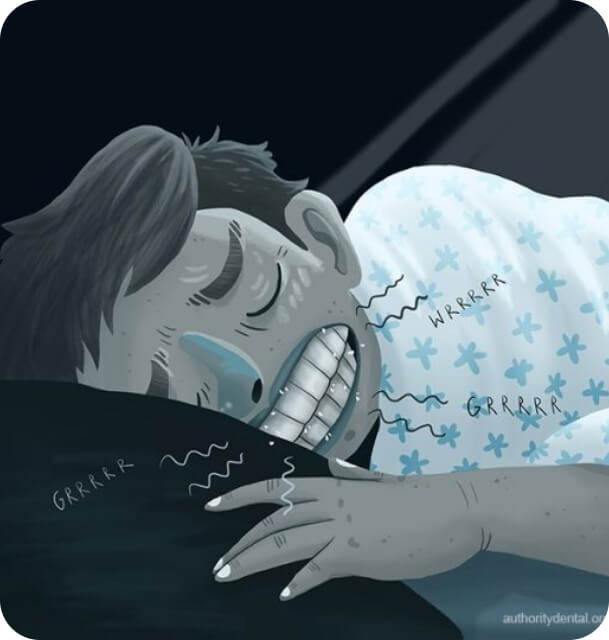
Bruxism: Do You Clench Your Teeth at Night?
Bruxism is an involuntary habit characterized by clenching or grinding teeth, usually at night, without a functional purpose. It is estimated that 10% to 20% of the population suffers from it, and its prevalence has increased due to factors such as stress and a hectic lifestyle. This disorder not only affects dental health but is also linked to a 30% increase in cases of jaw pain, headaches, and dental wear in adults.
Causes and Consequences of Bruxism
Bruxism can trigger disorders of the muscles and the temporomandibular joint (TMJ). Its causes vary and include factors such as malocclusion, stress, genetic predisposition, and allergies, affecting both adults and children.
The most common effects in adults include:
Headaches
Pain in the jaw muscles, neck, and ear
Dental wear and dental fractures
10 WARNING SYMPTOMS OF BRUXISM IN ADULTS
Erosions have appeared on your teeth, and the tips of your teeth look slightly filed down.
Dental hypersensitivity.
Longitudinal fracture and tooth loss.
Ear pain.
Tension in the jaw muscles, limited mouth opening, and muscle overload, especially in the morning.
Neck pain and general head pain, which can sometimes extend to the nape and shoulders.
Increased tooth mobility
Aesthetic problems, gum recession.
Anxiety, stress, and tension.
Insomnia and difficulty sleeping well.
Bruxism Treatment Barcelona
Nevertheless, the problem requires a dental review by a trusted dentist. The dentist’s role is essential to prevent permanent dental damage and potential joint disorders. The most common approach is to correct the habit with a dental splint worn at night. Patients appreciate the treatment and become “addicted” to it, and the benefits will be seen over time.
Excessive use of the splint is incorrect, so daytime use of the splint is not prescribed. Dr. Huertas suggests a trick to avoid the harmful habit of clenching teeth, which consists of positioning the tip of the tongue on the palate. This relaxed jaw position is entirely conscious, and it is impossible to perform it during sleep, which is why the bruxism patient must use a deprogramming splint at night.
If the splint has not been worn for some time, the teeth may shift, and a new one will need to be made. It is not just a splint or dental protector, but a habit that involves maintaining healthy oral hygiene, cleaning the splint with a specific product once a week, and visiting the dentist periodically to ensure it is perfectly adjusted.
Dr. Huertas recommends a series of massages that help relax the jaw
1- Place your index and middle fingers above the jaw and make small circles with your mouth slightly open for 3-5 minutes.
2- Place your hands on both sides of your face and do the same as above, but maintaining pressure.
3- Open your mouth and press the jaw downwards, while trying to close your mouth for about three seconds.
4- Place your index and middle fingers on your temple and intermittently press the area.
In cases of mild bruxism, the #dentalsplint or #deprogrammingsplint is an effective solution that will improve the patient’s quality of life and last depending on the degree of bruxism and each patient’s habits. Aside from physical help, if the cause of teeth grinding is psychological, learning relaxation techniques, yoga, exercising, and avoiding coffee and alcohol help improve sleep. In more severe cases, oral rehabilitation is very helpful. If the problem is a misalignment between the two arches, surgical intervention of the temporomandibular joint may be the solution in some cases where the discomfort of chronic craniomandibular joint dysfunction is severe.

The occlusal deprogramming splint MUST NEVER BE A SOFT PLASTIC DEVICE, as it worsens temporomandibular muscle tension.